









Restaurant plumbing in Ontario, CA carries a weight that most other commercial systems do not. A slow drain in an office building is an inconvenience. The same slow drain in a commercial kitchen is a health code issue, and it can put a permit and a reputation at risk in a single visit from an inspector.
Health inspectors evaluating Ontario restaurants pay close attention to a predictable set of plumbing conditions: active leaks, sluggish or backing drains, hot water that fails to reach required temperatures, grease trap condition, and adequate water pressure at every sink. Working in kitchens across Ontario, from the high-volume locations near Ontario Mills to the long-established restaurants along Euclid Avenue and Holt Boulevard, our team sees the same issues cited over and over. The good news is that nearly all of them are preventable with a maintenance plan handled by a qualified commercial plumber in Ontario rather than addressed after a citation is already written.
Common Plumbing Issues Health Inspectors Notice in Restaurants
Kitchen plumbing operates under conditions no residential system faces. Grease, food solids, high water volume, chemical sanitizers, and constant heat cycle through the same lines every single day, and that workload exposes problems quickly.
Based on what we see in Ontario restaurant properties, inspectors most often flag:
- Slow or clogged drains: Grease and food residue build a lining inside the pipe wall until drainage crawls. Standing water in a floor sink or prep sink is an immediate sanitation concern and one of the most commonly cited findings.
- Active leaks under sinks and at appliance connections: Dripping supply lines and loose drain connections create moisture pockets under equipment, which invites pests and mold growth in exactly the areas inspectors check first.
- Inadequate water pressure: Low pressure slows dishwashing cycles, compromises handwashing, and interferes with sanitizer dilution in three-compartment sinks.
- Hot water that falls short of requirements: Undersized or deteriorating water heaters cannot keep up with peak demand, and temperature drops during a rush are a recurring finding in busy kitchens.
- Grease trap neglect: Traps that are overloaded, improperly sized, or poorly maintained lead to sewer backups, odor complaints, and serious compliance problems.
- Cross-connection and backflow concerns: Missing air gaps, improper drain connections, and failed backflow devices are treated as significant violations because of the contamination risk they create.
Most of these develop slowly enough that kitchen staff adapt without noticing. A drain that takes a few extra seconds this month takes a few minutes next quarter. Professional inspection catches that progression while it is still a maintenance item instead of a shutdown.
Essential Plumbing Maintenance Tasks for Ontario Restaurants
A working maintenance program separates the restaurants that pass inspections cleanly from the ones scrambling to correct violations. The important distinction is knowing which items belong to your staff and which require a licensed commercial plumber.
Tasks your team should handle as daily or weekly routine:
- Visual leak checks: Assign staff to look under sinks, behind dish machines, and around ice machines during opening or closing and report any moisture immediately.
- Drain screen management: Keep strainers in place at every sink and empty them consistently so solids never enter the line.
- Grease disposal discipline: Train every shift to collect grease for proper disposal instead of rinsing it down a drain, which is the single most effective habit for protecting kitchen drain lines.
- Documentation: Log service dates, repairs, and grease trap pumping so records are ready when an inspector asks for them.
Work that belongs with a licensed commercial plumber:
- Scheduled drain line maintenance: Professional commercial drain cleaning services clear the grease and scale buildup that accumulates well beyond where any staff-level cleaning can reach, which is the difference between clean drainage and a mid-service backup.
- Water heater service and evaluation: Sediment accumulation from Inland Empire hard water reduces both capacity and efficiency, and a heater that cannot sustain required temperatures through a dinner rush needs professional assessment rather than a reset.
- Grease trap inspection and servicing: Sizing, baffle condition, and pumping frequency all affect compliance and should be evaluated by someone who works with commercial systems regularly.
- Backflow and cross-connection verification: These require trained testing and certification, not visual inspection.
- Semiannual system inspections: Two scheduled professional visits a year give you a documented record and catch deterioration before it becomes a violation.
Preparing for a Health Inspection: A Plumbing Readiness Checklist
Inspection preparation gets much easier when the underlying system has been maintained. Rather than trying to fix problems in the days before a visit, use this checklist to verify your restaurant is holding to standard year round.
- Fixture function: Every sink, toilet, dishwasher, and prep station should operate correctly with no visible leaking or dripping.
- Drain performance: Water should clear quickly at every drain, with no pooling, gurgling, or odor.
- Hot water capacity: Water must reach and hold the required temperature at the point of use, which typically means at least 120 degrees for warewashing operations, and it must sustain that through peak demand rather than only when the kitchen is quiet.
- Grease trap condition: The trap should be clean, properly sized for your volume, and supported by current pumping documentation.
- Handwashing stations: Each one needs unobstructed access, adequate pressure, and hot water available at all times.
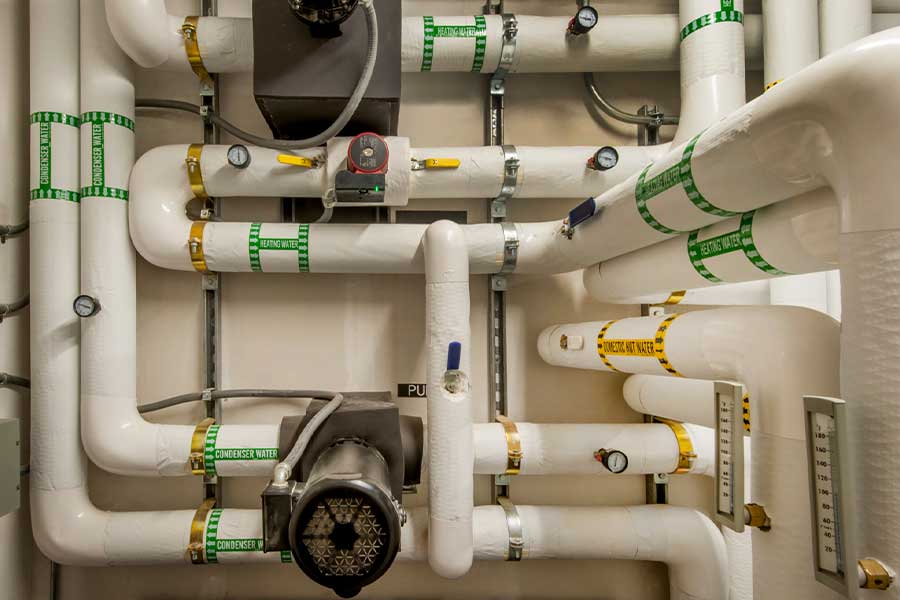
- Visible piping condition: Corrosion, staining, previous patch repairs, and makeshift fittings all draw attention and should be corrected by a professional before an inspection, not after.
- Service records: Keep repair invoices, maintenance schedules, and trap service logs organized and accessible.
When hot water is the weak point, and it often is in Ontario kitchens where hard water shortens equipment life, timely commercial water heater repair resolves the problem at its source. Temperature failures during an inspection are difficult to explain away, and they are entirely preventable with proper service.
The Role of Regular Plumbing Inspections in Food Safety
Plumbing inspections are a food safety measure, not just a compliance exercise. A cross-connection, a compromised backflow device, or a drain line backing into a prep area creates genuine contamination risk, and those conditions rarely announce themselves before they cause harm.
Scheduled professional evaluation delivers real operational value:
- Early detection: Deteriorating pipe, failing valves, and developing blockages are identified while repairs are still minor.
- Protection against closures: An emergency shutdown during service costs far more than a year of preventive maintenance.
- Regulatory confidence: Documented inspection history demonstrates diligence and reassures inspectors that your operation takes compliance seriously.
- Sewer line awareness: Recurring backups often indicate a problem in the building lateral rather than the kitchen, and identifying that early prevents a far more disruptive failure later.
In our service calls throughout Ontario, the restaurants with the fewest emergencies are consistently the ones with a maintenance schedule already on the calendar. The ones calling at 7 p.m. on a Friday with a flooded kitchen almost never have one.
Why Choosing a Trusted Plumbing Service Matters for Restaurants
Commercial kitchen plumbing is a specialty. Grease-laden waste lines, high-temperature dish machines, floor sinks, indirect waste requirements, and health code standards all demand experience that general residential work does not build.
Working with a plumbing company that handles restaurant plumbing regularly gives your operation several advantages:
- Correct diagnosis the first time: Technicians who understand commercial kitchen systems identify the real cause instead of clearing a symptom that returns next week.
- Code familiarity: Knowing what inspectors look for in San Bernardino and Riverside county jurisdictions means repairs are completed to standard.
- Scheduling around your operation: Service planned around prep and service hours protects revenue instead of interrupting it.
- Emergency response: When a line backs up during dinner service, waiting until morning is not an option.
Ontario’s growth around the airport corridor and the Ontario Mills district has pushed restaurant volume higher across the city, and plumbing systems in older buildings were not designed for that load. Having an established relationship with a commercial plumbing team means you are not searching for help while your kitchen sits offline.
Keeping Ontario Kitchens Inspection Ready
Plumbing problems in a restaurant are never just plumbing problems. They affect sanitation, staff efficiency, customer confidence, and your standing with the health department. Treating maintenance as a scheduled operating cost instead of an emergency expense is what keeps Ontario kitchens running and inspection ready all year.
Pride Plumbing, Drain Cleaning & Water Heater Repair is a women-owned, family-oriented company serving Ontario and the surrounding Inland Empire, with more than 240 five-star Google reviews behind our work. Our licensed technicians handle commercial kitchen plumbing with same-day appointments and 24/7 emergency availability, because a restaurant cannot wait for its drains, water heater, or grease lines to be someone else’s priority.
If your next inspection is approaching or your kitchen plumbing needs attention now, contact our team today and we will help you get your system where it needs to be.