










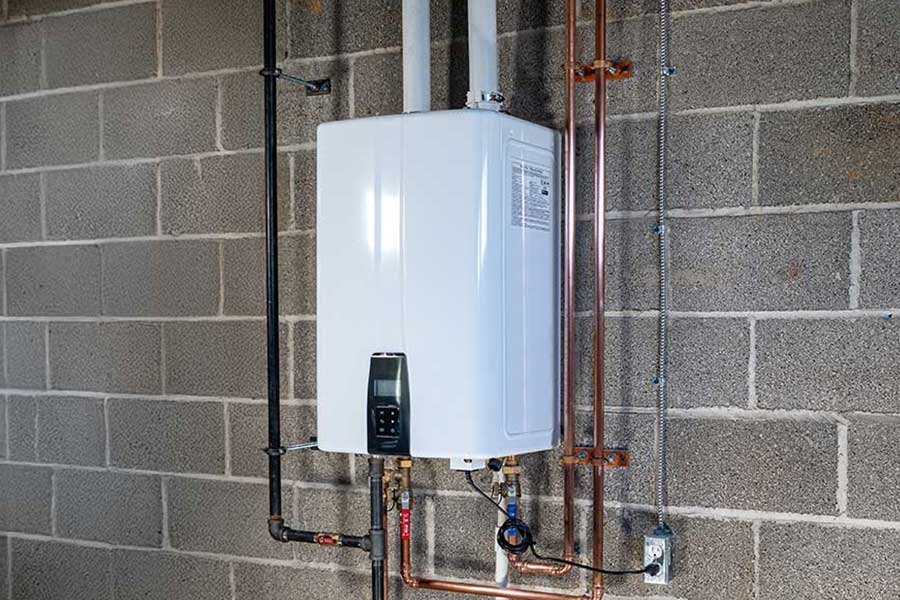
Switching to a tankless water heater is one of the more significant plumbing upgrades a Highland homeowner can make, and it is also one of the most commonly misunderstood. The units themselves are straightforward. The installation is not. Gas supply capacity, venting requirements, water quality, and sizing all have to line up correctly, and when any one of them is handled poorly the homeowner ends up with an expensive system that underperforms.
Working in homes across Highland, from the older properties near Base Line Street and Boulder Avenue to the newer construction out through East Highlands Ranch, our team has replaced a fair number of tankless units that were installed without the supporting work they needed. This article covers what the process actually involves, what to expect on installation day, and what determines whether the system performs the way it should. If you are weighing the upgrade, an in-home assessment from an experienced plumbing team in Highland is the most direct way to find out what your home requires.
The Benefits of Choosing a Tankless Water Heater
Tankless systems solve problems that storage tanks cannot, which is why demand for them keeps climbing in the Inland Empire.
- Hot water on demand: Water is heated as it flows rather than held in a tank, so back-to-back showers and running the dishwasher during a full house no longer mean someone gets the cold end of it.
- Meaningful space recovery: A wall-mounted unit frees up the floor area a forty or fifty gallon tank occupies, which matters in Highland homes with tight garages or interior utility closets.
- Lower standby energy loss: Storage tanks spend energy keeping water hot around the clock whether anyone uses it or not. Tankless units only consume energy when there is demand, which shows up on monthly bills over time.
- Longer service life: Properly maintained tankless systems commonly last roughly twice as long as a conventional tank, which changes the long-term math considerably.
- Reduced flood risk: There is no large volume of stored water waiting to release when a tank eventually fails, which is a real consideration for units installed in garages or near finished space.
The tradeoff is honest: upfront cost is higher, and the system depends on correct installation and ongoing service to deliver on any of the above. That is where the decision gets made.
What to Expect During the Installation Process
A tankless conversion is more involved than a straight tank swap. Knowing the sequence helps set realistic expectations.
- Initial assessment: A technician evaluates your existing water heater, gas meter and line capacity, electrical availability, venting path, and water supply piping. This visit determines whether additional work is needed before a unit can be installed at all.
- Location planning: Placement balances venting requirements, gas and water line routing, clearance for service access, and proximity to the fixtures that use the most hot water. Shorter runs mean faster delivery at the tap.
- Gas supply evaluation: This is the step most often underestimated. Tankless units demand significantly more gas input than a storage tank, and many Highland homes have supply lines sized for the older equipment. When capacity falls short, professional gas line installation is required to support the unit safely and allow it to reach full output.
- Removal of the existing system: The old heater is drained, disconnected, and hauled away, with the surrounding area protected throughout.
- Mounting and connections: The unit is secured, then water, gas, electrical, and venting connections are completed to manufacturer specification and local code.
- Venting installation: Tankless systems require their own dedicated venting, and reusing an old flue is not an option on most modern condensing units.
- Testing and commissioning: The system is pressure checked for leaks, fired, and tested across flow rates to verify consistent temperature output.
- Walkthrough: Before the crew leaves, you should understand the controls, the service schedule, and the warranty terms.
Most straightforward installations are completed in a day. Conversions that require gas line upgrades, new venting runs, or electrical work can extend beyond that, and permitting requirements in Highland should be factored into the timeline rather than treated as an afterthought.
Key Considerations for Tankless Water Heater Sizing
Sizing is where tankless installations succeed or disappoint, and it has to be settled before a unit is selected rather than after.
Two variables drive the calculation:
- Peak simultaneous demand: How many fixtures might run at once on a realistic morning. Two showers, a dishwasher, and a washing machine together represent a very different requirement than a single bathroom.
- Temperature rise: The difference between incoming groundwater temperature and your target output. Highland incoming water runs noticeably colder in winter than in August, and a unit sized only for summer conditions will disappoint in January when the temperature rise required is at its highest.
Additional factors that affect the final recommendation:
- Fixture flow rates: Older showerheads and tub fillers move more water than modern fixtures, which raises the demand the unit must satisfy.
- Household patterns: A family that staggers showers has different needs than one where everyone leaves at the same time.
- Future plans: An added bathroom or a growing household changes the equation, and it is far cheaper to size for it now.
- Placement and ventilation: The unit needs accessible clearance for annual service and a venting path that meets manufacturer requirements.
Undersizing produces lukewarm water during peak use. Oversizing wastes money and can cause short cycling at low flow. Getting it right requires an actual load calculation, not a guess based on square footage.
Maintenance Requirements for Your New Tankless System
Tankless units require less attention than storage tanks in some respects and more in others, and in the Inland Empire the water itself is the deciding factor.
- Annual descaling: Highland’s mineral-heavy water leaves scale on the heat exchanger, the most expensive component in the unit. Professional descaling uses a circulation pump and proper solution to clear that buildup, and skipping it is the leading cause of premature tankless failure we encounter.
- Inlet filter service: The screen filter catches sediment and requires periodic cleaning by a technician during scheduled service.
- Venting inspection: Vent runs and terminations need to be verified as clear and properly sealed, which is both a performance and a safety matter.
- Combustion and performance checks: Gas pressure, flow sensors, and error history should be reviewed during annual service to catch developing problems.
- Temperature setting: Around 120 degrees balances scald protection against adequate supply, and adjustments should be made by a technician familiar with the unit.
Because hard water is the primary threat to a tankless system in this region, many Highland homeowners pair the upgrade with water softener installation. Reducing mineral content protects the heat exchanger, extends the interval between descaling visits, and benefits every other fixture and appliance in the house at the same time.
Common Questions About Tankless Water Heater Installation
A few questions come up on nearly every consultation.
- How long does installation take? A standard replacement is usually a single day. Conversions requiring gas line upgrades, new venting, or electrical work can run longer.
- Will it fit my existing setup? Sometimes. Gas capacity and venting are the usual obstacles, which is why the pre-installation assessment matters so much.
- How much will I actually save? Savings depend on household usage, the efficiency of the unit being replaced, and gas rates. Most homeowners see a steady reduction in monthly costs, with the larger benefit coming from the longer service life.
- Is maintenance really necessary? In an area with water as hard as ours, yes. Manufacturer warranties typically require documented annual service, and neglecting descaling will shorten the life of the unit substantially.
- Do I need a permit in Highland? Water heater replacement generally requires permitting and inspection, and a licensed contractor should handle that as part of the job rather than leaving it to you.
- Will hot water be instant? It is continuous rather than instant. There is still a brief delay while water travels from the unit to the fixture, which is one more reason placement matters.
Making the Switch to Tankless in Highland
A tankless water heater is a long-term investment that performs well when the installation accounts for your home’s gas capacity, venting, water chemistry, and actual hot water demand. Handled correctly, it delivers reliable hot water for years. Handled as a simple swap, it becomes an expensive disappointment. The difference comes down to the assessment done before anyone orders a unit.
Pride Plumbing, Drain Cleaning & Water Heater Repair is a women-owned, family-oriented company serving Highland and communities across the Inland Empire, backed by more than 240 five-star Google reviews. Our licensed technicians handle tankless water heater installation and repair with same-day appointments available, 24/7 emergency service, and transparent pricing from the first estimate.
If you are considering the switch or your current system is nearing the end of its life, contact our team today and we will walk your home, review your options, and give you a straight answer on what it will take.