










Choosing the right water heater is one of the more consequential decisions a homeowner makes, because the system affects daily comfort, monthly energy costs, and long-term maintenance expenses for a decade or more. In Ontario, CA, where households range from compact single-family homes near the Cucamonga-Guasti Regional Park area to larger properties in the Haven Avenue corridor, hot water demand and available installation space both factor into the decision in meaningful ways.
This guide walks through how each system works, where each one performs best, and how to evaluate the tradeoffs for your specific home. Our Ontario, CA plumbing repair team handles both tankless and traditional water heater installation, repair, and replacement throughout the city.
Understanding the Basics: Tankless vs. Traditional Water Heaters
The fundamental difference between these two systems comes down to how and when water is heated.
A traditional water heater stores a set volume of hot water in an insulated tank, typically between 40 and 80 gallons, keeping it at the set temperature around the clock. When hot water is drawn from a fixture, heated water exits the top of the tank and cold water enters the bottom to be reheated. The advantage is a ready supply of hot water available immediately. The limitation is that the supply is finite. When the stored volume is depleted during a period of heavy use, the household has to wait for the tank to reheat before hot water is available again.
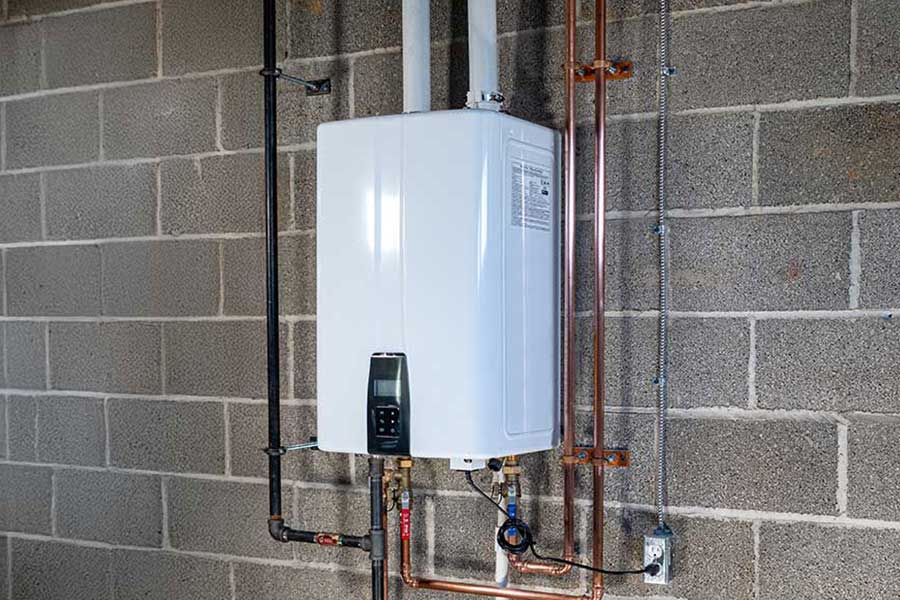
A tankless water heater, by contrast, has no storage tank. Cold water passes through a heat exchanger when a hot water fixture is opened, and the unit heats it on demand before it reaches the fixture. This means hot water is available continuously as long as the unit’s flow rate capacity is not exceeded. The tradeoff is a higher upfront cost and, in some homes, the need for upgraded gas lines or electrical service to support the unit’s energy demand.
Both systems are reliable and widely used. The right choice depends on how a household uses hot water, the home’s existing infrastructure, and the owner’s priorities around upfront cost versus long-term efficiency.
Key Benefits of Choosing a Tankless Water Heater
Tankless water heaters have grown significantly in popularity among Ontario homeowners, and the reasons are worth understanding in detail.
- On-demand hot water: Because the unit heats water as it flows through rather than drawing from a stored supply, hot water does not run out during back-to-back showers, laundry cycles, or dishwasher runs.
- Energy efficiency: Traditional tank heaters maintain water temperature continuously, which means they consume energy around the clock even when no hot water is being used. Tankless units only operate when hot water is called for, which can reduce water heating energy costs by 20 to 30 percent depending on usage patterns.
- Longer service life: Tankless water heaters typically last 20 years or more with proper maintenance, compared to 10 to 15 years for traditional tank units. Over a homeowner’s time in a property, that extended lifespan can offset the higher initial investment.
- Space savings: Tankless units are wall-mounted and significantly more compact than tank heaters, which is a practical advantage in homes with limited utility space.
- Reduced leak risk: Without a large tank of stored water, the risk of a catastrophic tank failure flooding a utility area is eliminated.
Professional tankless water heater installation and repair ensures the unit is sized correctly for the home’s demand and that gas or electrical supply meets the unit’s requirements before installation.
Why Some Homeowners Prefer Traditional Water Heaters
Despite the efficiency advantages of tankless systems, traditional water heaters remain the right choice for a significant portion of Ontario homeowners, and for straightforward reasons.
- Lower upfront cost: Traditional tank units typically cost between $300 and $800 for the unit itself, compared to $1,000 to $3,000 for tankless models. For homeowners working within a tighter budget or planning to sell a property in the near term, the lower initial investment makes sense.
- Simpler installation: In homes already configured for a tank heater, replacing a unit with a comparable model is often more straightforward than converting to tankless, which may require upgrading gas lines or electrical service.
- Reliable simultaneous supply: A properly sized tank heater can supply hot water to multiple fixtures at once without the flow rate constraints that some tankless units face under peak demand conditions.
- Widely available parts and service: Traditional water heater technology is well-established, replacement components are readily available, and most licensed plumbers service them routinely.
- Familiar maintenance profile: Homeowners who have managed a tank heater through its service life understand what maintenance involves and what the typical failure modes look like.
For households that do not have unusually high simultaneous hot water demand and are not prioritizing long-term energy savings as a primary factor, a traditional unit installed by a licensed plumber delivers reliable performance at a lower entry cost.
Cost Comparisons: Tankless vs. Traditional Water Heaters
An accurate cost comparison accounts for both the initial investment and the long-term operating and maintenance expenses, since those two categories often favor different systems.
Upfront costs:
- Traditional tank water heaters: $300 to $800 for the unit, plus installation labor. Conversion from an existing tank unit is typically straightforward.
- Tankless water heaters: $1,000 to $3,000 for the unit, plus installation labor. Homes that need gas line upgrades or electrical service changes will incur additional costs.
Operating costs:
- Tankless units consume energy only when hot water is in use, which translates to 20 to 30 percent lower water heating costs in most households compared to a tank heater operating continuously.
- Traditional units incur standby heat loss around the clock, which adds a consistent baseline energy cost regardless of actual hot water usage.
Lifespan and replacement:
- Traditional units: 10 to 15 years typical service life, with replacement needed more frequently over a homeowner’s time in the property.
- Tankless units: 20-plus years with proper maintenance, meaning fewer replacement cycles over the same period.
For many Ontario homeowners, the math over a 15 to 20 year horizon favors tankless when energy savings and replacement frequency are factored in alongside the higher upfront cost. For shorter time horizons or budget-constrained situations, traditional may still be the practical choice. A licensed plumber familiar with both systems can help model the comparison based on actual usage and current utility rates.
Making the Right Choice for Your Ontario Home
Four factors matter most when evaluating which system fits a specific home:
- Hot water demand: How many people live in the home, and how much simultaneous hot water use occurs at peak times? Large households with overlapping morning routines may need either a high-capacity tankless unit or a larger tank to meet demand reliably.
- Energy efficiency goals: Homeowners focused on reducing utility costs over time generally find that tankless units deliver meaningful savings, particularly when natural gas is the fuel source.
- Available space: Homes with limited utility room, a small closet installation, or no dedicated utility area benefit from the compact footprint of a tankless unit.
- Budget and planning horizon: The upfront cost difference is real, and the payback period through energy savings is typically several years. Homeowners planning to remain in the property long-term are better positioned to realize the full benefit of a tankless investment.
A professional assessment by a licensed plumber includes evaluating the home’s existing gas or electrical infrastructure, current water heater placement, and household usage patterns before recommending a system. This ensures the installation is sized and configured correctly from the start, which directly affects performance and efficiency. Water heater repair is also available for homeowners looking to extend the life of an existing unit rather than replace it immediately.
Finding the Right Hot Water Solution for Your Ontario Home
There is no universal right answer between tankless and traditional water heaters. The better system is the one that fits the household’s actual usage, the home’s infrastructure, and the owner’s financial priorities. What matters most is that the decision is made with accurate information and that the installation is completed by a licensed plumber who sizes and configures the system correctly.
Pride Plumbing, Drain Cleaning & Water Heater Repair serves Ontario homeowners with experienced water heater installation, replacement, and repair for both tankless and traditional systems. We are a women-owned, family-oriented business with 240+ five-star Google reviews, same-day scheduling, and 24/7 emergency service across the Inland Empire.To discuss which system is the right fit for your home or to schedule a professional assessment, contact our team today and we will walk you through the options.